|
|
|
|
|
|
SLEEP APNEA SURGERY
Turbinate Reduction
The volume of soft tissue can be reduced with the application of radiofrequency energy. This treatment procedure is usually performed in the office. A local anesthetic is first injected into the tissue. A probe is then inserted into the tissue, transmitting radiofrequency energy. Minimal discomfort is generally experienced during the application of this procedure. During the healing process (within 1-3 weeks), scar tissue forms and causes the tissue's overall size to decrease. The nasal turbinates, soft palate and tongue can be shrunk in size to increase airway space.
A significant advantage of radiofrequency treatment is its precision in targeting tissue. Because the treated tissue remains within 60-90 degrees Celsius, heat dissipation to the surrounding tissues is limited, thus minimizing excessive tissue injury and complications.
Nasal Turbinates
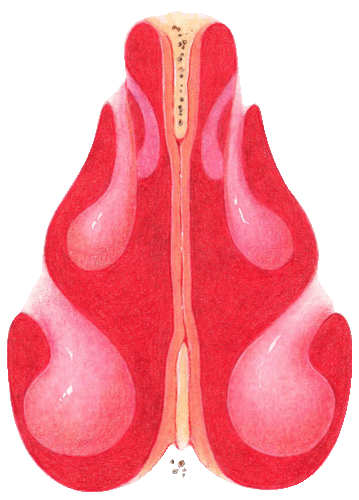
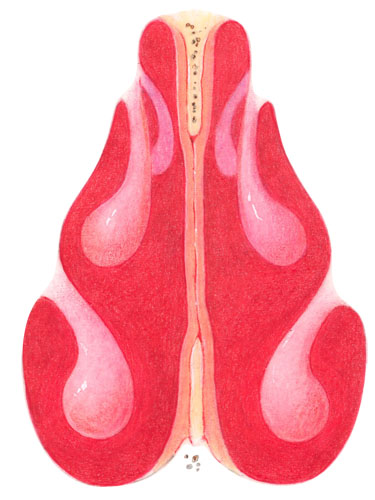
Inferior turbinate hypertrophy is a frequent cause of nasal airway obstruction. The size of the turbinate can be reduced by radiofrequency to improve nasal breathing. The procedure is performed in the office under local anesthesia. The treatment takes only a few minutes, in which there is minimal discomfort. There is no restriction in activity after the treatment. However, nasal stuffiness is present for 3-5 days after treatment.
|
|
|
|
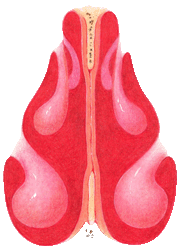
(Pre - Op)
|
|
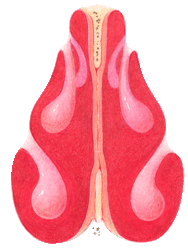
(Post - Op)
|
|
|
|
|